Fan Bearing Failure Warning Identified Early
Machine Sentry detected rising vibration and lubrication risk before a critical cement terminal fan bearing failed
CementProducts used
Machine Sentry Online
The Challenge
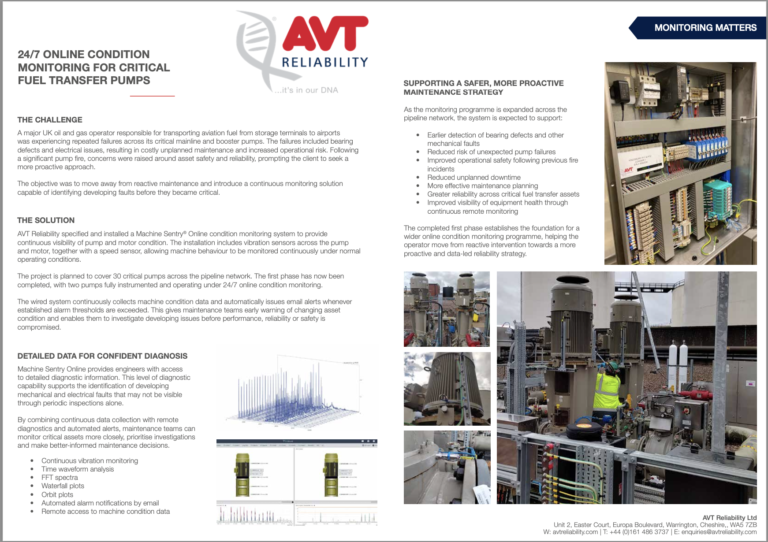
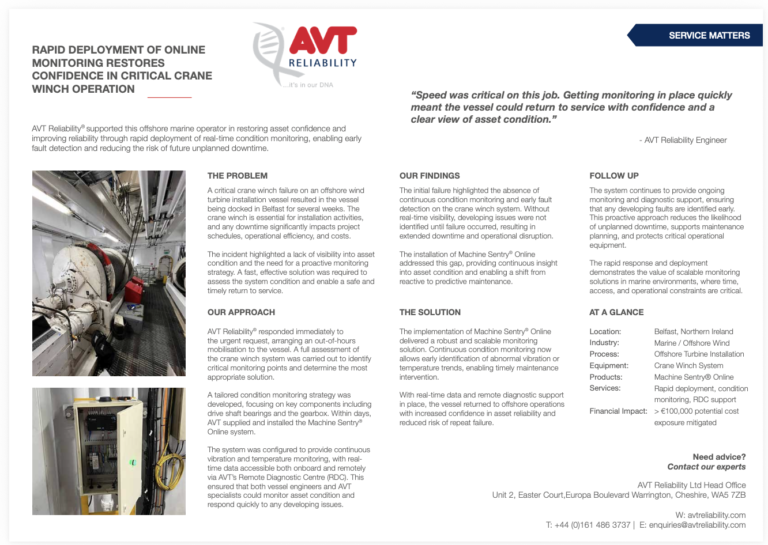
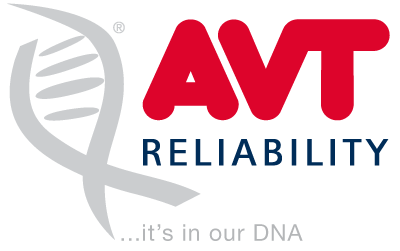
During routine remote diagnostics, an AVT Reliability Inc engineer identified elevated fan vibration indicating a potential imbalance.
Material buildup on the sheave was considered the likely cause, and a corrective action was raised recommending a sheave balance check and visual inspection.
The recommendation was not completed, and vibration levels remained above the asset’s normal operating range.
Working to Achieve
A cement terminal in Cape Canaveral, Florida, uses a belt-driven dust collector fan as part of its site operations. The asset was monitored through Machine Sentry remote diagnostics to identify developing mechanical issues and give the site time to plan corrective maintenance before reliability or safety were affected.
Our Approach
Three months after the original action was raised, the site reliability engineer contacted AVT Reliability because the fan’s vibration levels had begun to increase further.
The AVT Reliability team reviewed the Machine Sentry data and found that the vibration trend was rising at an alarming rate. A high-frequency noise floor was also visible in the acceleration spectrum, indicating a potential lubrication issue.
The site was advised to check the fan bearing lubrication urgently.
Our Findings
The fan bearing subsequently failed. During the root cause investigation, AVT Reliability reviewed the condition monitoring data with site personnel and confirmed that the automatic lubricator had been knocked off the bearing, resulting in inadequate lubrication.
As lubrication deteriorated, the bearing temperature increased until it eventually caught fire. Although correcting the sheave imbalance alone would not have prevented the lubricator from becoming displaced, completing the recommended inspection may have identified the issue before it developed into a bearing failure and fire.
The Solution
The event demonstrated the importance of treating condition monitoring recommendations as actionable maintenance information rather than isolated data alerts.
When elevated vibration was first identified, the next planned shutdown provided an opportunity to:
- Visually inspect the fan, sheave & surrounding components
- Check for material buildup on the sheave
- Confirm whether an imbalance condition was present
- Complete the recommended corrective maintenance
- Inspect the bearing lubrication arrangement and automatic lubricator
Timely investigation could have reduced bearing stress and may have identified the developing lubrication risk before it resulted in failure and fire.
Follow-Up
The asset is understood to have been returned to service; however, some vibration trends subsequently remained higher than they had been before the failure. A further corrective action was therefore raised to check:
- Motor alignment
- Hold-down bolts
- Fan bearing lubrication
The case provides a clear internal example of why corrective actions, visual inspections and condition monitoring alerts must be followed through. Data can identify a developing risk, but the potential value is only realised when the recommended maintenance response is completed.